
AI Cockpit Agents: New Opportunities and Potential Risks for Automakers
In-vehicle AI agents are expected to become a key selling point to attract car buyers, but they may also bring risks of dependence on third-party suppliers. Cubic3 executive Steven Cochrane elaborated on the opportunities and challenges to WardsAuto.
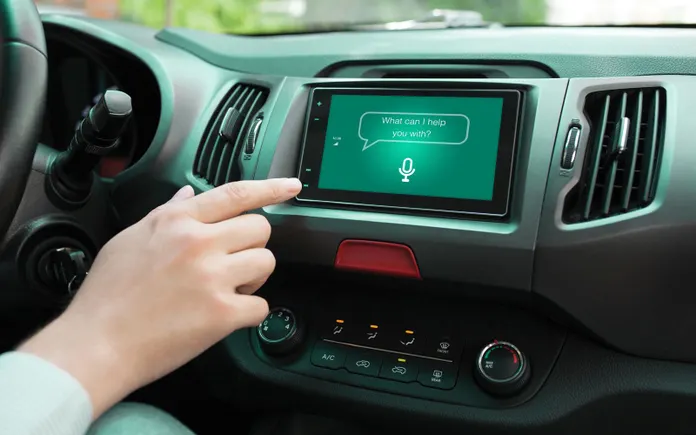
In-vehicle artificial intelligence agents will become one of the most powerful selling points to attract car buyers, but they may also expose automakers to the risk of dependence on third-party suppliers. This is the view of Steven Cochrane, Vice President of Data and AI at Cubic3, an automotive connectivity software supplier, who explained to WardsAuto the opportunities and challenges AI agents will bring to the automotive industry.
Cochrane said that for consumers, the application of AI agents is undoubtedly a good thing, because it can free up the fragmented time people spend in the car—what many consider the "third space." "Therefore, people expect to be able to do more while driving," he said. "For me, the biggest challenge lies in the interface."
He noted that at a time when autonomous driving is still in its early stages, the interface must rely on voice commands. "But the interface must be very simple and clear, because it is voice-driven," Cochrane explained. He believes this needs to be achieved through dialogue between users and AI agents, allowing the driver or other passengers in the car to express their needs for vehicle services.
A typical example is the AI-driven chatbot launched by Cerence, which was demonstrated to WardsAuto at the 2025 IAA Mobility show.
But Cochrane emphasized that productivity is the goal, not just conversation. He mentioned Microsoft's investment in in-vehicle productivity suites, aimed at helping occupants make the most of their travel time, essentially creating an office environment in the car. In addition, personal and family activities can also benefit from powerful AI agents.
"I need to order flowers for my wife for our wedding anniversary, or I want to book a restaurant," he said. "People want to make a request and have it completed through voice interaction, rather than just getting a list of restaurants within a 5-kilometer radius."
Cochrane pointed out that as people become accustomed to the convenience of AI at home, they now demand the same experience in their cars. He cited ABI Research's forecast that AI-driven cockpit applications will grow from 5 million vehicles today to 70 million by 2035.
However, the challenge for automakers lies in making the technology work in the way consumers need it to. "Technology capabilities now need to keep up, so as not to disappoint consumers and, most importantly, not to make them reach for their phones," he added.
Dependence, Latency, and the Cloud
Another potentially thornier issue facing automakers is the risk of dependence that arises when AI agents connect to external digital ecosystems. Cochrane believes that automakers, which currently have full control over the cockpit, will have to cede some control to third-party operators when that control extends to the internet.
"So now you're beyond the controlled environment," Cochrane said. "You will depend on the quality of the connection, the latency and speed of the connection, which in turn makes you dependent on mobile network operators and ultimately on where the cloud services are located." This means automakers must contend with fragmented distribution architectures, which will introduce potential vulnerabilities and points of failure.
To mitigate these risks, robust mobile network connectivity is essential and must be able to roam seamlessly across borders, especially in a multi-country continent like Europe. Cochrane said this can only be achieved through strong collaboration. "So, it's still about partnerships and how to build resilience into these connected services?"
The need for close collaboration between automakers, network operators, and other stakeholders is a perennial topic of discussion at the Mobile World Congress held annually in Barcelona. "No one can own the entire ecosystem spanning the vehicle, the network, and the cloud alone," he said.
Cochrane believes that partnerships underpinned by industry standards are the only safe and commercially viable path forward for this technology, ensuring a seamless experience for consumers. "Standards bring openness, which in turn accelerates innovation," he said. "But achieving that is very difficult."